
Ownership
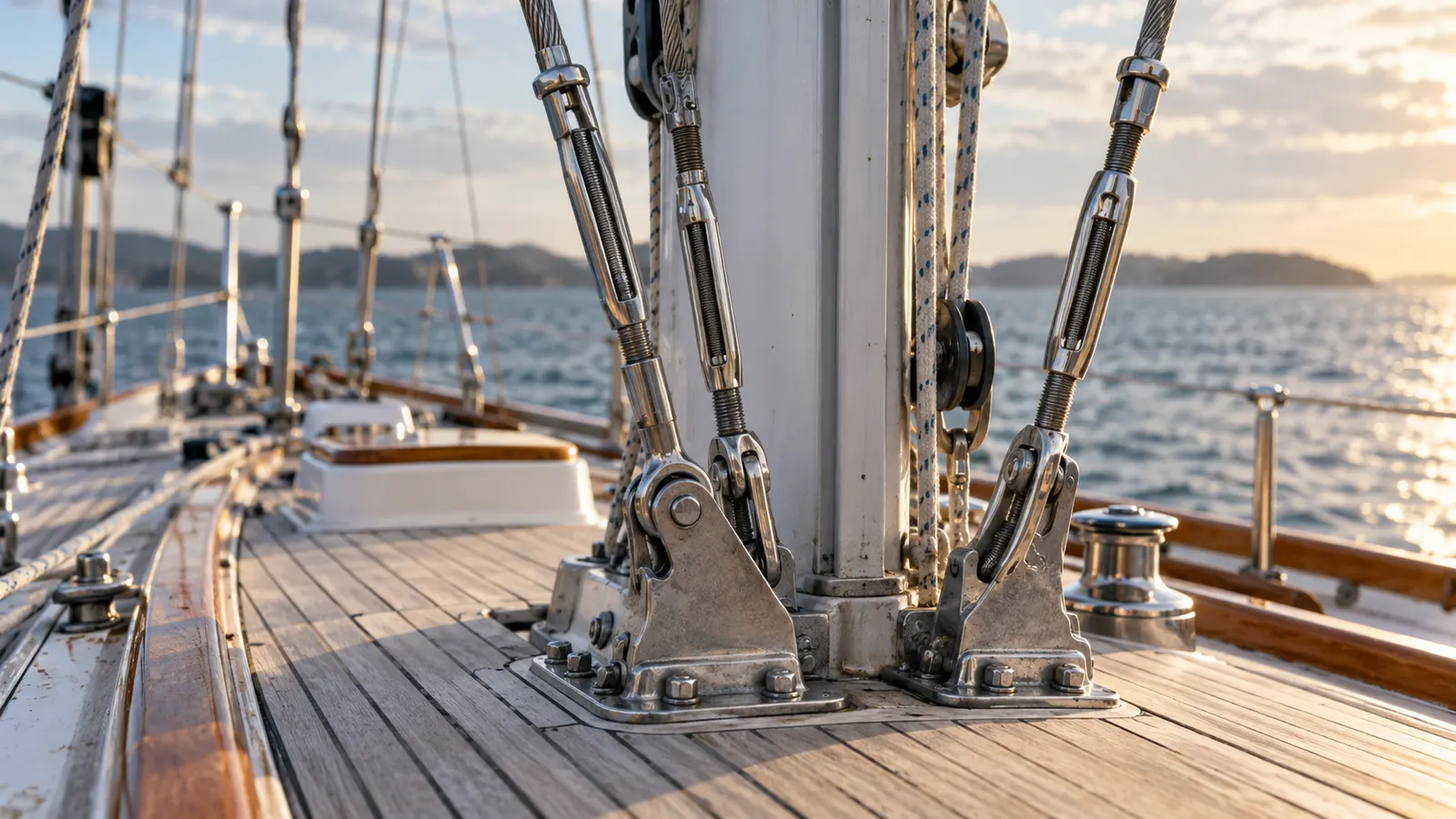
Standing rigging failure points
| Component | Failure mode | Where it shows |
|---|---|---|
| Swaged terminals | Cracking at the swage, hidden corrosion inside | Usually at the lower terminals |
| Wire | Broken strands, work hardening, fatigue | At terminals and where it passes spreaders |
| Chainplates | Crevice corrosion below deck, cracked tabbing | Under the deck, invisible from above |
| Clevis pins and toggles | Wear, elongation, missing split pins | At every attachment point |
| Spreader tips and roots | Fatigue, corrosion at the root fitting | Aloft, needs a rig inspection |
| Mast step and partners | Corrosion at the heel, water in the step | Below the sole on a keel-stepped rig |
| Furling gear and forestay | Fatigue inside the extrusion, unseen | Hardest to inspect of all |
Insurance cover for rigging damage
Two mechanisms recur. The first is a general exclusion for wear, corrosion and gradual deterioration, which can reach a rigging failure that had been developing. The second is a specific rigging-age condition, applied at the time of the claim rather than at inception — which means a rig that was within the threshold when you bought the policy may be outside it when the mast comes down.
Rig inspections and maintenance evidence
- Walk the deck each season: split pins, clevis pins, terminals, turnbuckles, chafe.
- Have the rig inspected aloft by a rigger at a sensible interval, and get the report in writing.
- Inspect chainplates from below, and investigate any leak at a chainplate immediately rather than resealing over it.
- Check the mast heel and step for corrosion and standing water on a keel-stepped rig.
- Replace split pins and tape sharp ends every season — cheap, and a common cause of avoidable failure.
- Keep every rigging invoice with its date. That date is the claim.
Rigging claim and replacement costs
A dismasting is rarely just a mast. The usual claim includes the spar, the standing and running rigging, the sails that were up, the boom and vang, masthead electronics, deck hardware torn out, and the recovery of everything over the side — plus the possibility of hull damage from a spar alongside in a seaway. Against that, a rig inspection and a replacement schedule are inexpensive.
Condition is what decides marine claims
Almost every declined marine claim is an argument that a failure was gradual rather than sudden. The records you keep are what answers it.
Related guides
- Standing Rigging Age: Insurance Replacement Conditions
- Dismasting and Rigging Insurance Claims
- Marine Surveys and Boat Insurance Australia
- Boat Maintenance Records and Insurance Claims
- Boat Insurance Exclusions Explained
- How To/Survey And Older Boats
- Boat Insurance Underwriting: Surveys, Age and Maintenance
- Yacht Sails and Rigging Insurance Guides