
Claims
Immediate steps after a boating incident
- Deal with safety first. People, then the vessel, then the paperwork.
- Take reasonable steps to prevent further damage — this is a condition of almost every policy, and reasonable costs of doing it are usually recoverable under a sue-and-labour provision.
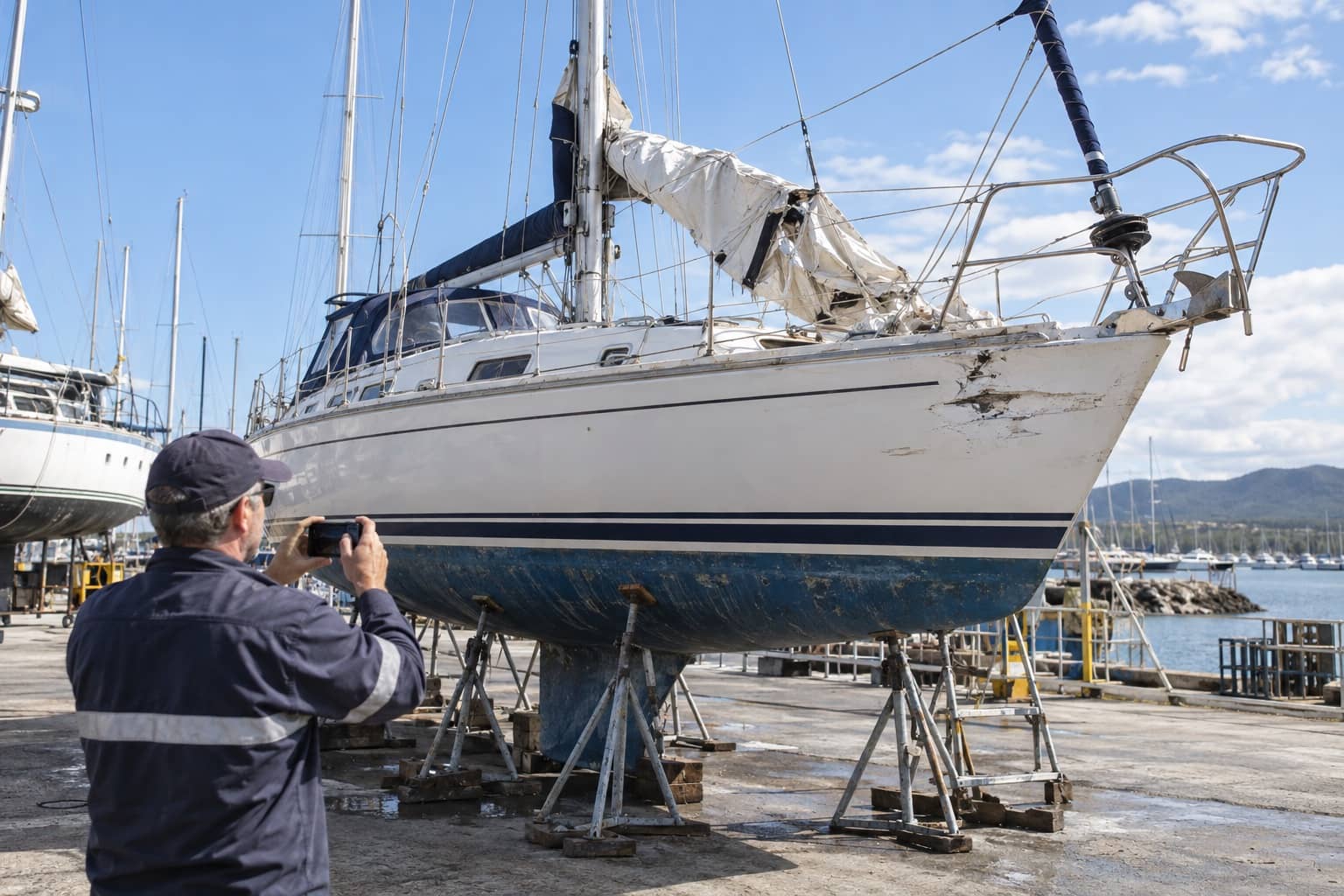
- Photograph and video everything before anything is moved, cleaned or repaired.
- Preserve the failed component. The hose, clamp, seacock or fitting that failed is the single most important object in the claim.
- Notify the insurer, using the emergency number if it is out of hours. Early notification is a policy condition, not a courtesy.
- Report to the police, the harbour master or the marina where the incident type requires it, and keep the reference number.
- Do not authorise repairs beyond making the boat safe until the insurer or their assessor has seen it.
Documents required for a boat insurance claim
| Document | Why it is asked for |
|---|---|
| Proof of ownership and current registration | Establishes insurable interest |
| The most recent survey and any recommendations | Shows known condition and whether recommendations were actioned |
| Maintenance and service records | Separates sudden failure from gradual deterioration |
| Photographs before and after the event | Establishes pre-loss condition |
| Logs, chartplotter track or AIS history | Establishes position, speed and navigation limits |
| Weather and sea-state data | Tests whether conditions were forecast and foreseeable |
| Quotes from a marine repairer | Establishes quantum |
| Police or authority report reference | Required for theft, collision and pollution |
Marine assessors and survey reports
A marine assessor or surveyor appointed by the insurer is not there to argue with you. Their report answers two questions: what caused this, and what does it cost to put right. Cause is the one that decides the claim, because most marine exclusions are cause-based — wear and tear, gradual deterioration, lack of maintenance, pre-existing damage. Be present for the inspection if you can, answer factually, point out the physical evidence, and ask for a copy of the report.
Evidence mistakes during a claim
- Guessing at the cause in writing. 'It must have been the old seacock' becomes the insurer's finding.
- Delaying notification because you are hoping to handle it yourself.
- Cleaning up thoroughly before photographing, or repairing before inspection.
- Admitting liability to another owner or to the marina.
- Answering the assessor about events you did not witness as though you did.
- Failing to mention that someone else was operating the vessel.
Disputing a declined or underpaid claim
A declinature is the start of a process, not the end of one. Ask for the decision in writing with the specific policy clause relied on, request the assessor's report, and use the insurer's internal dispute resolution process first. If that does not resolve it, the Australian Financial Complaints Authority can consider the dispute at no cost to you, and its determinations bind the insurer.
Read the wording before you need it
Almost every disputed marine claim turns on a definition, an exclusion or a condition the owner had never read. The PDS guide explains which sections decide claims.
Preparing boat insurance claim records
- Keep the PDS, the certificate of insurance and the emergency number somewhere you can reach from the boat without power.
- Photograph the vessel, the rig, the engine bay and the electronics at the start of each season.
- Keep invoices, survey reports and service records off the boat.
- Check your sum insured against what replacement actually costs now, not what you paid.
- Read the conditions section once, in the calm, so you know what you are required to do.
Related guides
- Boat Insurance Claims Australia: Incidents and Disputes
- Insurance Complaints and AFCA for Boat Owners
- Getting Boat Insurance After a Claim
- Boat Insurance Exclusions Explained
- Boat Insurance Excesses Explained
- Product Disclosure Statement Guide for Boat Insurance
- Yacht Insurance Claims: Authorising Emergency Repairs
- Yacht Claim Assessment and Repair Guides