
Resources
Pre-season cyclone insurance checks
- Read the policy's cyclone and named-storm clauses
- Confirm the vessel's declared home location
- Check whether a cyclone plan is an insurance condition
- Service the mooring or confirm marina storm procedures
- Identify haul-out options early
- Photograph the vessel and major systems
- Back up registration, insurance and survey documents
- Confirm emergency contact details with the insurer
Cyclone boat preparation records
- Mooring inspection report
- Marina berth agreement
- Haul-out booking or plan
- Rigging inspection
- Engine and battery status
- Bilge pumps and alarms
- Shore power arrangements
- Tender and loose equipment storage plan
Queensland insurance for yachts over 15 metres
Separately verify the statutory pollution, salvage and wreck-removal insurance requirements that apply in Queensland coastal waters.
Pre-storm photographs and evidence
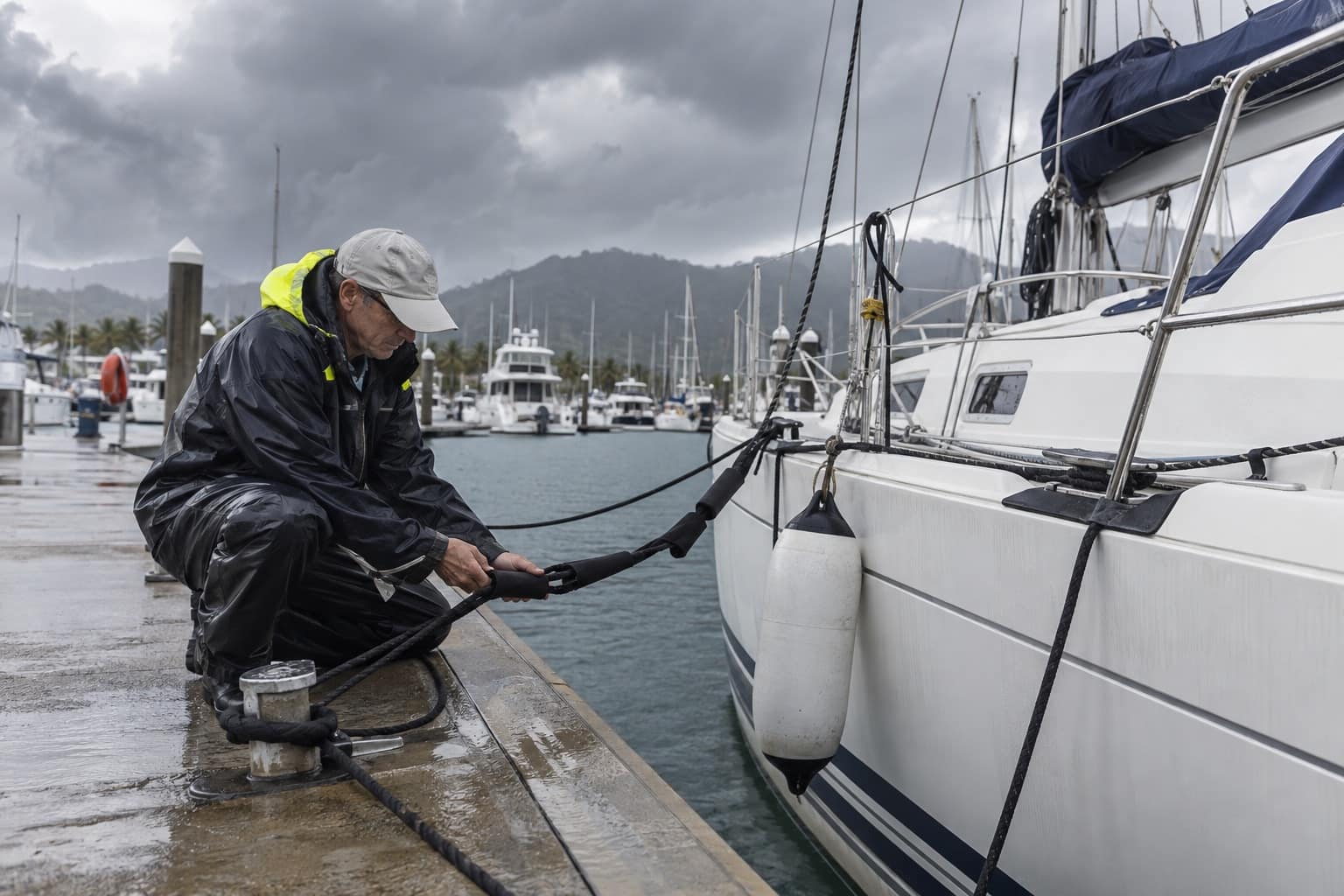
Photograph the vessel, berth or mooring, lines, chafe protection and any insurer-required preparation before severe weather is forecast. Keep dated invoices for mooring service, haul-out bookings and maintenance. If the policy requires a written cyclone plan, compare the plan with the actual berth and local marina procedures each year. The cyclone insurance guide and storm-damage claim guide explain how preparation and claim evidence connect.
Related guides
- Cyclone Boat Insurance Australia
- Queensland Boat and Yacht Insurance Guide
- Queensland Compulsory Ship Insurance Over 15 Metres
- Boat Insurance Resources: Checklists and Glossary
General information onlyThe information on sailboatinsurance.com.au is general educational information only. It may be wrong, incomplete or out of date, and you should not rely on it as a substitute for the current policy documents or professional advice. It does not take into account your objectives, financial situation or needs and is not personal financial product advice. Insurance cover depends on the actual policy wording, Product Disclosure Statement, certificate of insurance, endorsements, exclusions, limits, sub-limits and underwriting decisions that apply to your vessel. Always read the current policy documents before buying, renewing or changing cover. For legal, financial or insurance advice about your own circumstances, consider speaking with an appropriately licensed professional.